
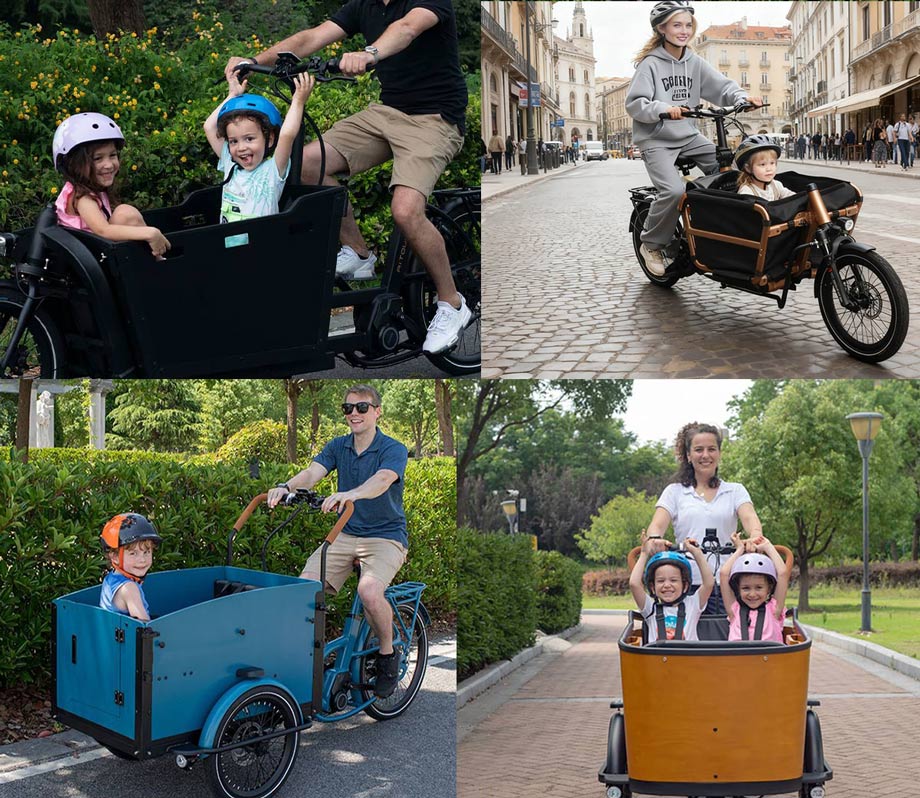
Choosing the right cargo bike size matters more than most people expect. It affects your comfort, safety, handling, and even how your family uses the bike in daily life. Whether you’re new to cycling, switching from a commuter bike, or upgrading to a family bike for school runs, this guide helps you understand what really influences sizing—and how to pick the perfect fit.
🚲 What Cargo Bikes Look Like in Real Life

Why Bike Size Matters (Especially for Family Cargo Bikes)
Most people think bike size is about height only. But with cargo bikes, the factors multiply—because you’re not just riding for yourself. You’re carrying kids, groceries, pets, or weekend gear.
1. Your Height & Body Proportions (Bicycle Frame Fit)
Height alone is not enough. Your leg length, arm reach, and preferred posture all change the required frame size.
- Long-legged riders need more saddle height
- Shorter riders often prefer low-step frames
- A well-fitted bicycle frame keeps your back relaxed and improves balance
Tip: If you share your family bike, choose a frame with wide adjustment range.
2. Gender & Riding Posture
Gender doesn’t define your bike—but posture habits sometimes do:
- Many women prefer a shorter reach
- Men often choose a slightly longer cockpit
- Seniors benefit from a semi-upright position similar to an everyday commuter bike
3. Riding Experience
If you’re new to cycling or returning after years, you may prefer:
- Lower center of gravity
- Shorter overall length
- A step-through design
Experienced riders may choose longer or more agile models (like longtails or mid-tails).
4. Your Local Environment (City Transport Conditions)
Where you ride changes everything:
- Hilly areas: choose a mid-drive motor for stronger torque
- Narrow streets: choose compact front-loaders or mid-tail cargo bikes
- Coastal/windy cities: heavier and more stable bikes feel safer
European cyclists often prioritize regulation compliance, especially for brakes, battery safety(Electric Bike Battery),and lighting.
5. Usage Scenarios
Ask yourself: What will you really use the bike for?
- School runs → front-loader or e trike (easy eye contact with kids)
- Groceries → longtail or mid-tail
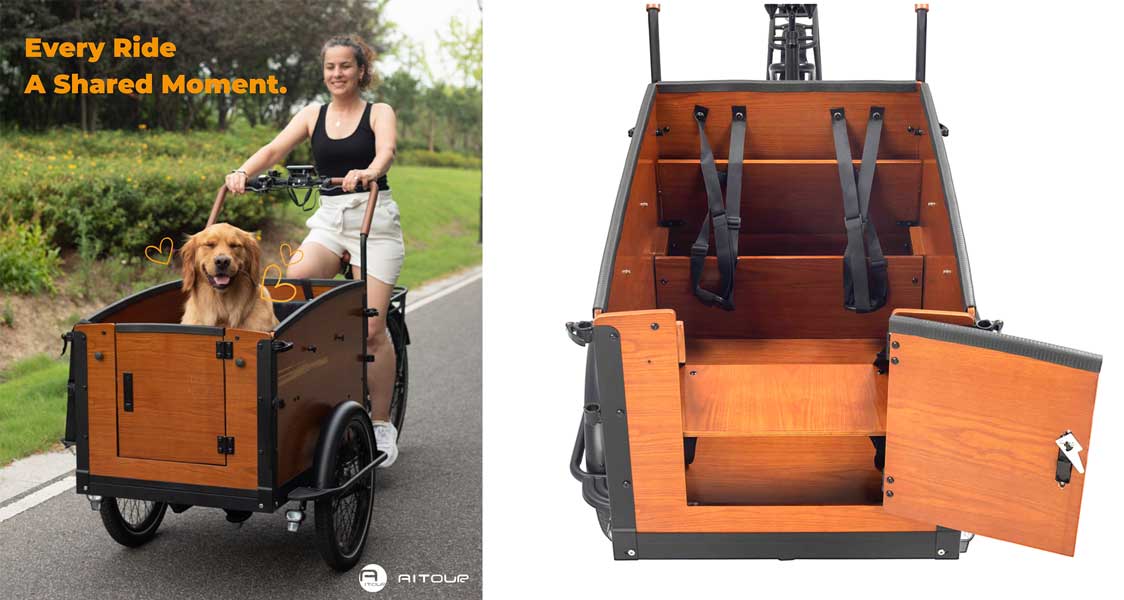
- Dog transport → front box with low entry
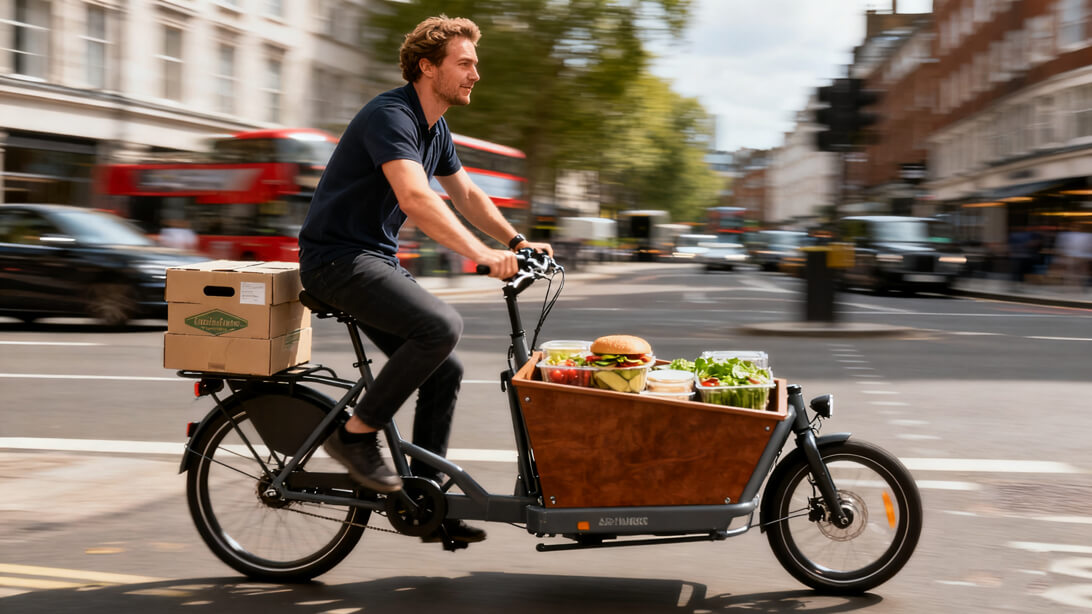
- Daily commuting → a hybrid between commuter bike + cargo setup
6. Load Requirements (Kids, Cargo, Pets)
Different families have different setups:
- One child vs. two or three
- Kids + groceries
- Kid + large dog
- Heavy weekend equipment
Your load determines the box size, wheelbase, and frame strength.
7. Your Strength Level(E-bike vs. regular bike)
Cargo bikes without motors require real physical strength.
But with electric assistance (cargo e bike or electric tricycle), even riders with limited strength can handle hills or full loads.
Simple rule:
If you will carry kids → choose mid-drive cargo e-bike.
If you need maximum stability → choose e trike / electric tricycle.
8. Stability Preference
Your comfort level determines your bike category:
- Prefer maximum stability? → three-wheeled cargo bike
- Prefer agility? → two-wheeled front-loader
- Prefer “normal bike feeling”? → longtail bike
9. Parking & Storage Space
Cargo bikes are bigger than a standard commuter bike.
Check:
- hallway width
- garage depth
- elevator availability
Foldable bike solutions exist, but rarely replace a true cargo platform.
10. Road Safety Confidence
Your comfort with brakes, cornering, and weight distribution affects sizing.
For example:
- Shorter riders may feel safer with lower seating height
- Families should choose strong disc brakes and stable geometry
11. Local Regulations
In Europe, regulations define:
- Max motor power
- Battery safety (EN standards)
- Child transport requirements
- Brake standards
Choosing a size that complies with your local regulation ensures safety and legal use.
12. Special Needs
Some families benefit from:
- Low-step frames for grandparents
- High-load frames for special equipment
- Adaptive seating setups

📌 Comparison: Types of Electric Cargo Bikes
Table: Common Cargo Bike Types & How They Fit You
| Category | Best For | Stability | Manoeuvrability | Size Feel | Notes |
|---|---|---|---|---|---|
| Front-loading cargo bike | 2–3 kids, pets | Medium | High | Long | Great eye contact with kids |
| Longtail cargo bike | 1–2 kids, mixed use | Medium | Medium | Like normal bike | Best balance of size + capacity |
| Mid-tail cargo bike | 1 kid, compact homes | Medium | High | Short | Good for narrow cities |
| Three-wheeled cargo bike (e trike) | Maximum stability | Very high | Lower | Wide | Ideal for new riders & seniors |
| Electric tricycle | Seniors, mobility support | Very high | Lower | Compact | High comfort and safety |
| Foldable e bike | Commuting only | Medium | High | Very compact | Not for child transport |
| Commuter bike (what is a commuter bike) | Daily solo rides | Medium | High | Standard | Not a cargo solution |
📊 Recommended Body Height vs. Cargo Bike Length
| Rider Height | Suitable Cargo Bike Length | Notes |
|---|---|---|
| <155 cm | 160–180 cm | choose low-step frames |
| 155–170 cm | 180–200 cm | fits most family cargo bikes |
| 170–185 cm | 200–220 cm | stable for 2–3 kid setups |
| >185 cm | 210–230 cm | better handling & knee room |
🛠 Bonus: How to Maintain Your Bike Chain
Since many families are new to bikes, here’s a quick guide on how to clean bike chain:
- Shift to the smallest cog
- Wipe off dirt with a dry cloth
- Use a chain-cleaning tool or eco-safe degreaser
- Dry thoroughly
- Re-lubricate with a weather-appropriate oil
- Wipe extra oil to avoid dust
Clean chain = smoother ride + longer battery efficiency.
⭐ Which Size Should You Choose? (Simple Decision Guide)
Choose a front-loader if:
You want eye contact with kids & a big box.
Choose a longtail if:
You want a versatile daily family bike for mixed trips.
Choose a mid-tail if:
Your storage space is tight.
Choose a three-wheeled cargo bike if:
You want max stability and don’t like balancing at low speeds.
Choose an electric tricycle if:
Comfort and safety outweigh speed.

⭐ Best Ebike Brands?
Your size choice also depends on the brand’s frame geometry. Look for brands known for:
- Stable geometry
- High-quality mid-drive motor
- Tested Electric Bike Battery safety
- Reliable brake systems
- Real EU compliance
Final Thoughts: Choosing the Right Size Is Choosing the Right Life
A family-friendly bike, whether it’s a longtail, front-loader, or e trike, becomes part of your daily rhythm.
Choose the size that fits your height, your habits, and your family’s real life—not just the specs.

Laat een reactie achter
Alle reacties worden gemodereerd voordat ze worden gepubliceerd.
Deze site wordt beschermd door hCaptcha en het privacybeleid en de servicevoorwaarden van hCaptcha zijn van toepassing.