
Introduction
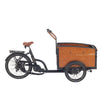
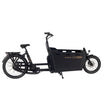
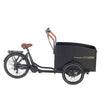
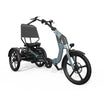
As urban areas become increasingly congested and environmentally conscious, cargo bikes have surged in popularity as a practical and green alternative for transporting goods, children, and even pets. However, riding a cargo bike in a busy city environment presents unique safety challenges due to their size, weight, and handling characteristics. Whether you’re a seasoned cargo bike rider or just starting out, understanding cargo bike safety tips for urban riding is crucial to protect yourself, your passengers, and others on the road.
In this comprehensive guide, we’ll explore proven strategies to enhance your safety, from securing your cargo to mastering defensive riding techniques, all backed by expert insights and the latest research. Let’s dive in and pedal towards safer, more confident urban journeys.
Why Cargo Bike Safety Matters in Urban Environments
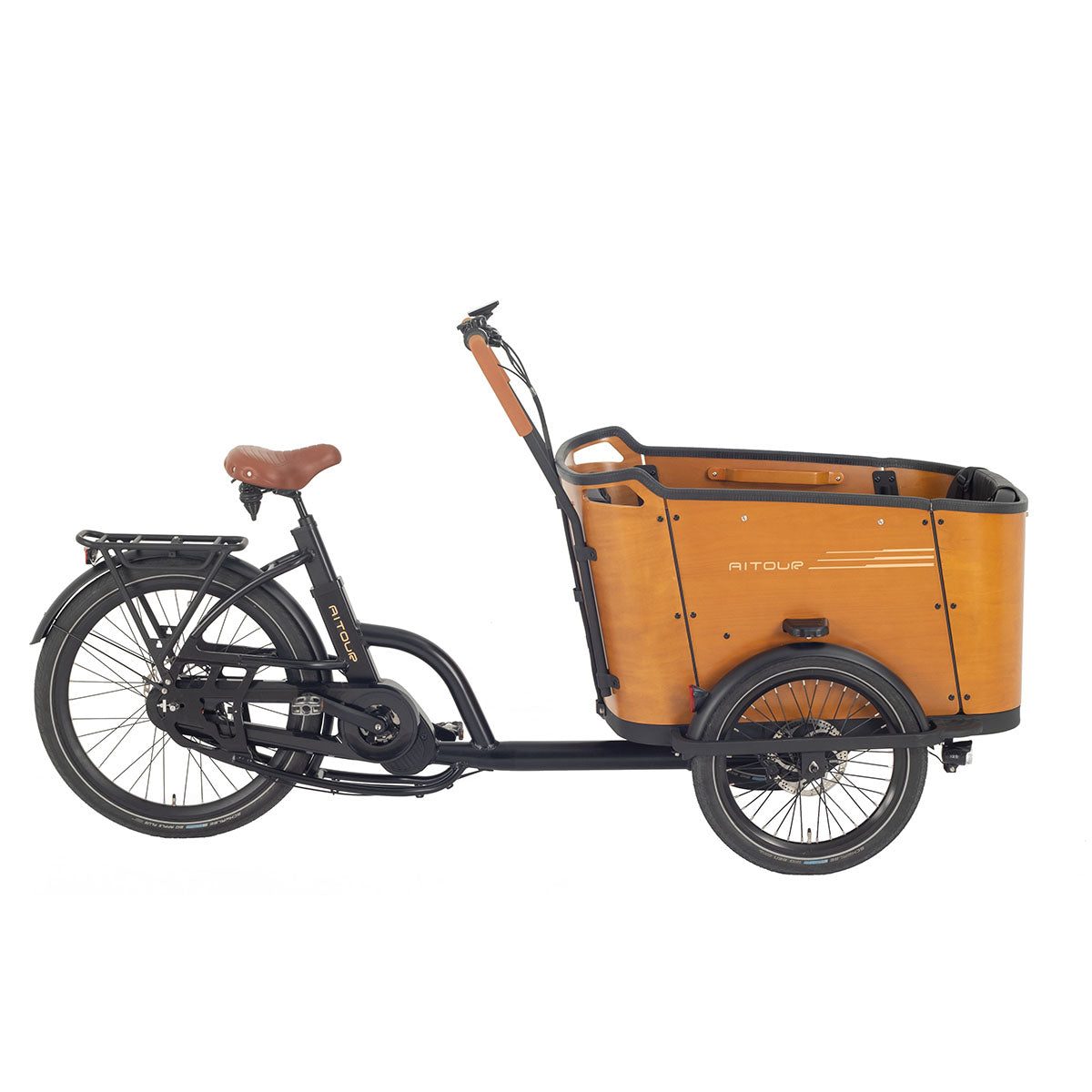
Cargo bikes are heavier and bulkier than traditional bicycles, often carrying loads exceeding 100 kg. This increased mass affects stability, braking distance, and maneuverability. Urban settings — with their unpredictable traffic, pedestrians, and obstacles — require riders to be extra vigilant.
Proactive safety measures like enhanced visibility, load management, and hydraulic braking systems dramatically reduce accident risks and improve rider confidence.

1. Prioritize Visibility: Be Seen to Be Safe
Visibility is your first line of defense in urban traffic. Cargo bikes, due to their size and slower acceleration, can be overlooked by motorists and pedestrians alike.
Key visibility tips include:
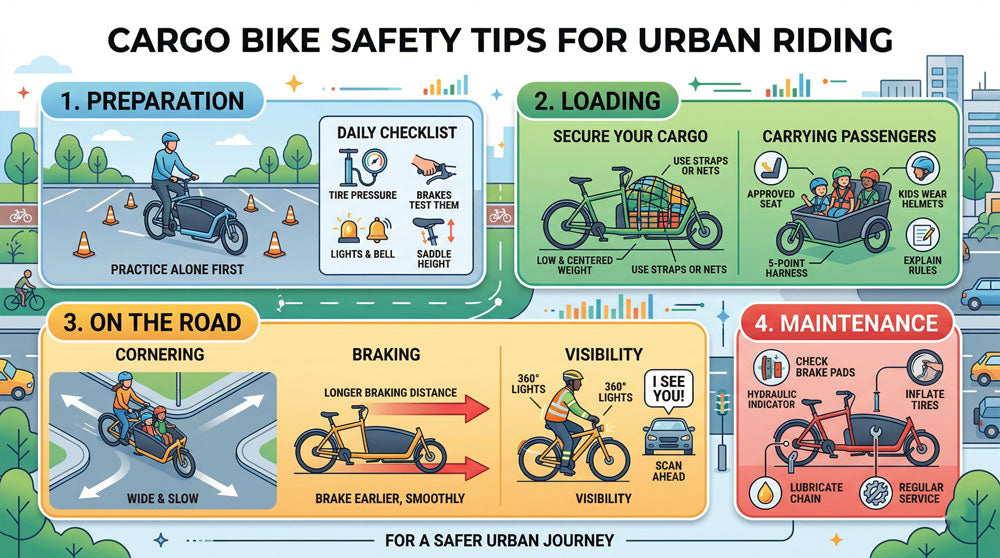
- 360° Lighting: Equip your cargo bike with a powerful 500-lumen front light, brake-sensor rear lights, and moving spoke LEDs to ensure visibility from all angles.
- Reflective Clothing: Wear Class 3 reflective gear with at least 2-inch reflective stripes to be visible up to 200 meters, especially in low-light conditions.
- Helmet-Mounted Lights: Consider smart helmets with integrated lamps that track your gaze, enhancing visibility during shoulder checks.
- Use Bells and Audible Signals: Alert pedestrians and other cyclists of your presence in crowded areas.
Research Insight: Pulsing rear lights attract attention without blinding other road users, a subtle but effective way to stand out in traffic.
2. Secure and Balance Your Cargo Correctly
Proper loading is critical to maintaining stability and preventing accidents.
Best practices for cargo loading:
- Weight Placement: Position heavier items low and centered in the cargo area to lower the center of gravity and improve balance.
- Limit Load Size: Keep the load within 30% of the bike’s wheelbase length to avoid overloading, which strains braking and stability.
- Use Secure Fastening: Employ ratchet straps, nets, or specialized cargo fasteners to prevent shifting or swinging loads.
- Avoid Top-Heavy Stacking: Side-by-side panniers or well-distributed loads are safer than stacking items vertically.
Expert Tip: Balanced cargo prevents rollovers and dangerous swings, especially when braking or navigating turns.

3. Master Defensive Riding and Traffic Navigation
Urban riding demands anticipation and caution to avoid collisions.
Defensive riding strategies include:
- Scan Ahead: Continuously monitor 12 seconds ahead and check your 4-second peripheral zones for sudden hazards.
- Intersection Approach: Slow down to 15 km/h or less at intersections, take the center lane to discourage squeezing, and signal your intentions early using both arm gestures and electronic indicators.
- Maintain Safe Distance: Keep a safe buffer from large vehicles to avoid blind spots; never assume you are visible.
- Use Designated Bike Lanes: Whenever possible, ride on bike paths to minimize interaction with motor vehicles.
- Avoid Distractions: Refrain from using phones or headphones while riding.
Data Insight: Approaching intersections slowly maximizes reaction time and reduces collision risk.

4. Wear a High-Quality Helmet — Non-Negotiable Safety Gear
Helmet use is essential for all cargo bike riders and passengers, especially given the higher center of gravity and potential for falls.
Helmet considerations:
- Choose MIPS or Full-Face Designs: These offer broader protection, including jaw and temple areas.
- Replace Every 5 Years or After Impact: Helmets degrade over time and after crashes.
- Ensure Proper Fit: A snug, comfortable fit maximizes protection.
Safety Fact: Helmets significantly reduce the risk of skull fractures and traumatic brain injuries in cargo bike accidents.
5. Maintain Your Cargo Bike Regularly for Optimal Performance
Regular maintenance ensures your cargo bike operates safely and efficiently.
Maintenance checklist:
- Hydraulic Brakes: Inspect monthly or every 500 km. Replace brake pads when the groove is no longer visible (use the 50-cent coin test). Hydraulic disc brakes provide superior stopping power, especially under heavy loads.
- Tire Pressure: Keep tires inflated to manufacturer recommendations; low pressure reduces emergency responsiveness by up to 40%.
- Drivetrain Lubrication: Clean and lubricate chains and gears regularly to prevent malfunctions.
- Light Integrity: Check all lights and reflective elements before each ride.
- Frame and Components: Inspect for motor, cracks, loose bolts, or wear.
Pro Tip: Hydraulic disc brakes with 180 mm rotors and four-piston calipers dissipate heat 30% faster than mechanical brakes, crucial for steep descents.

6. Practice Emergency Maneuvers to Build Confidence
Unexpected hazards like sudden stops, door openings (“dooring”), or obstacles require quick, controlled reactions.
Essential emergency skills:
- Controlled Skids: Learn to skid safely at speeds of 20–25 km/h to avoid crashes.
- Evasive Swerves: Practice swerving smoothly to dodge obstacles without overcorrecting.
- Progressive Rear Braking: Apply rear brakes progressively to maintain control and avoid jackknifing.
- Dooring Avoidance: Shift weight backward and steer into the escape corridor if a car door opens suddenly.
- Frontal Obstacle Response: Brake smoothly and lean back to prevent flipping.
Training Advice: Regular drills in safe, controlled environments build muscle memory for real-world scenarios.
7. Use Integrated Safety Systems and Quality Gear
When purchasing safety gear and accessories, opt for integrated systems that enhance both visibility and stability.
Recommended gear includes:
- Hydraulic Brakes: For reliable stopping power.
- Integrated Lighting: Front and rear lights with brake sensors.
- Reflective Vests: With wide stripes for maximum visibility.
- Secure Load Fasteners: Ratchet straps, nets, or cargo boxes designed for stability.
- Certified Helmets: ASTM or equivalent safety certifications.
Industry Insight: Industrial experts confirmed that dual hydraulic brakes and integrated lighting are mandatory for urban cargo bike safety.
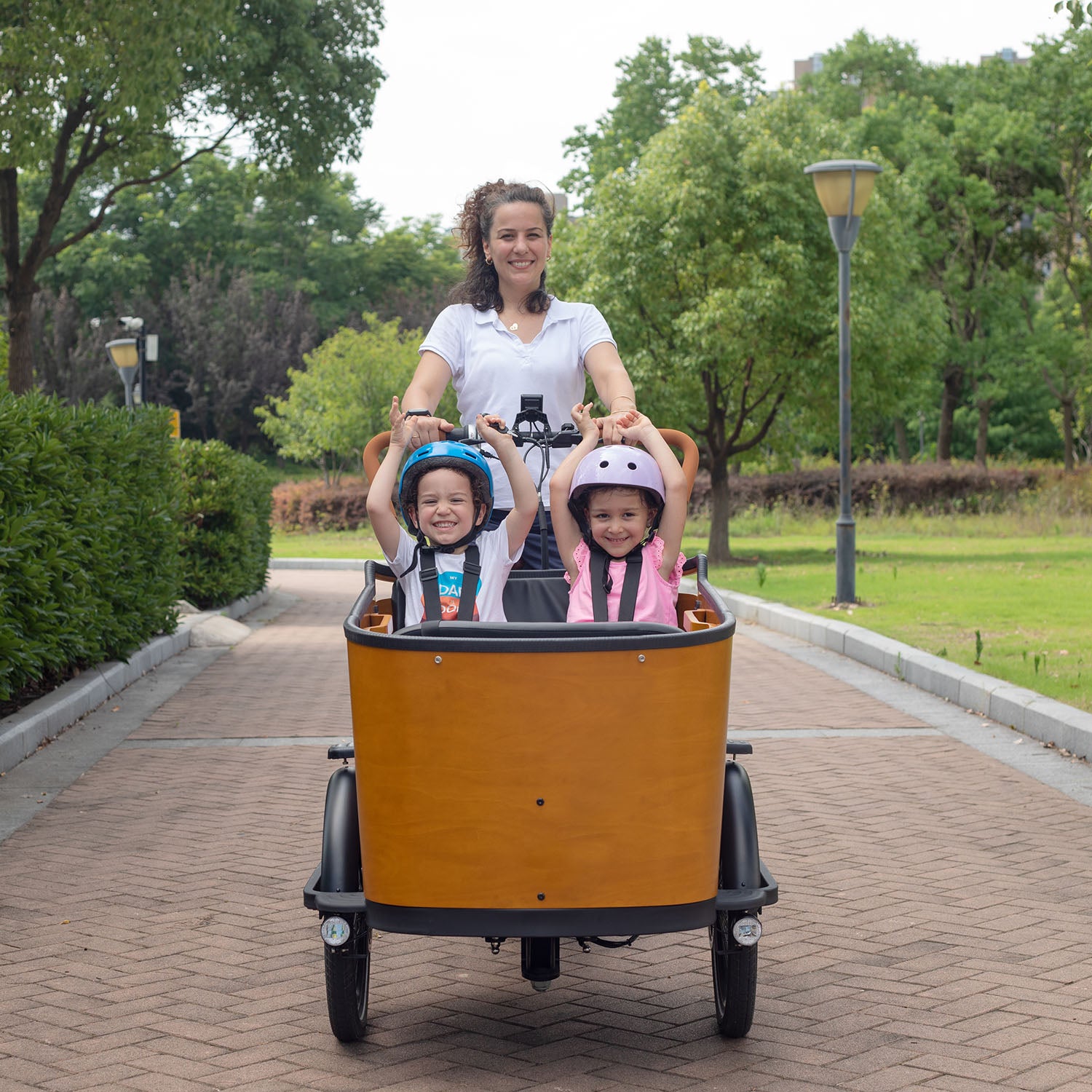
8. Special Considerations When Transporting Children
Cargo bikes are popular for family transport, but safety is paramount.
Child safety tips:
- Use manufacturer-approved seats with 5-point harnesses.
- Ensure children weigh under 22 kg for safe seating.
- Always position child seats low and centered.
- Children must wear ASTM-certified helmets.
- Never transport children who cannot be properly secured.
Legal Reminder: Check local regulations regarding child transport on cargo bikes.
Conclusion
Riding a cargo bike in urban environments offers unmatched convenience and eco-friendly benefits, but it requires a heightened focus on safety. By following these cargo bike safety tips for urban riding—from maximizing visibility and securing your load to mastering defensive riding and maintaining your bike—you can confidently navigate city streets while protecting yourself and others.
Ready to make your urban cargo bike journeys safer? Start by equipping your bike with quality lights and brakes, practicing your emergency maneuvers, and always wearing a certified helmet. Share this guide with fellow riders and explore more resources to keep your rides smooth and secure.


Hinterlasse einen Kommentar
Alle Kommentare werden vor der Veröffentlichung geprüft.
Diese Website ist durch hCaptcha geschützt und es gelten die allgemeinen Geschäftsbedingungen und Datenschutzbestimmungen von hCaptcha.